How malls and freeways helped segregate America

Hopping into a Chevy Bel Air and commuting from the ‘burbs to a city job or pulling up to the nearest mall to do some shopping or hang with friends at the food court — these were concepts sold as part of the American dream when they were introduced in the U.S. in the 1950s.
However, some architects and designers claim that these innovations were instruments of segregation that further divided white America from communities of color.
Adam Paul Susaneck is a New York City-based architect and creator of the project Segregation by Design, which looks at urban renewal, the construction of freeways, and redlining — a discriminatory practice that he says involved “grading each neighbourhood for investment value, based on race.”
“I’m not implying that every architect who participated in these urban regeneration projects was a racist. But I do believe that. [they were]Participating in a process that was started by racist redlining. The system was,” Susaneck told Nora Young on Spark.
“They’re telling you not to invest in this area, because of the people who live there.”
To demonstrate how these architectural projects could devastate certain areas, Susaneck compares historic aerial photographs of cities to photos taken after some of the highways were built and shows how the neighbourhoods were reshaped to accommodate them.
“[I’m] trying to give folks an idea of what it was actually like because it’s described one way in the documents … and generally, these [places that were destroyed]They were described as “slums”, he said. said.
“So I like really to show that they simply weren’t. They are often indistinguishable in many ways from what we consider to be the best neighborhoods in cities.
LISTEN – How urban design can harm us and what we can change:| How urban design can harm and what we can do to change it:
Spark54:52549: Designing an inclusive universe
From early shopping malls to the first network of freeways, a look at how urban planning and design have been used as exclusionary tools in the past — and how land-based, Indigenous architecture can offer a more inclusive way forward.
Moving to the suburbs
Susaneck explains that there were a few factors that contributed to the architectural segregation in which he studies. This includes the move away from streetcars and trains in major cities, which paved the way for cars.
White Americans were choosing to live in suburbs and still work in cities. This required more roads and highways to be built.
Susaneck says the United States government helped accelerate this process with two particular bills: the 1949 Federal Housing Act, legislation that aimed to improve housing and help cities clear areas then defined as slums, and the 1956 Federal Highway Act that provided 90 per cent funding for cities looking to upgrade their highways to federal standards.

American soldiers returning from Second World War received housing in the suburbs. However, that same offer was not extended to Black G.I.s.
According to Susaneck, it was written right into the deed that houses could be sold to Caucasians only. So technically, Black soldiers returning from war were eligible for the G.I. They were not eligible for the G.I.
He says all of this contributed to “white flight” from urban areas.
“There are many incentives for the white middle-class to move to the suburbs and drive. This naturally decreases the number of people who use transit systems.” said Susaneck.
“The effect of the highway is to encourage automobile-based suburbanization … to provide the literal route of white flight.”
How malls contributed in inequality
The mall’s construction also contributed to this move to the suburbs and, by extension, to inequality.
America’s first mall, the Southdale Center, was built in Edina, Minn., in 1956. Edina is a suburb of Minneapolis, and many malls that followed were built in the suburbs as well. They were therefore not as accessible to communities dominated by people of colour.
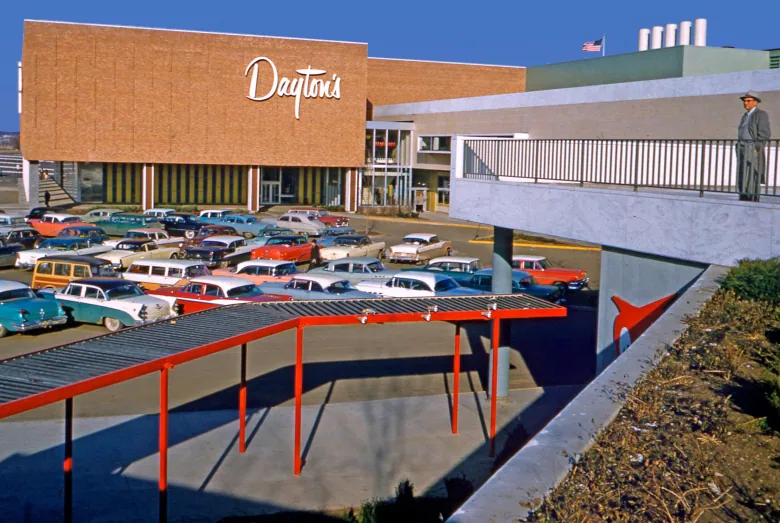
“A lot of the suburbs in the early years were only open to white families, either implicitly or explicitly.” All of the people who lived around the mall would have been from white families.” saidAlexandra Lange, Brooklyn’s design critic and the author of Meet Me by the Fountain: A Inside History of the Mall.
“So the mall was really created to give women and children at home a place to shop and socialize.”

It wasn’t just that the mall was located in a place that served white Americans. Lange said the design itself also contributed to segregation in that many malls were created only for people who owned cars.
“Mall owners actively fought to have bus stops, sometimes near the malls, but had them stop in inconvenient spots to keep their clients to the higher-income customers who could afford cars and could drive longer distances to the Mall.”
Building inclusive architecture
Architect Shawn Bailey says there are ways to avoid the mistakes of the past and build a more inclusive future.
Bailey, an Indigenous scholar and assistant professor in the University of Manitoba’s faculties of architecture and engineering and a member of the Métis Nation of Ontario, says the freeway and the mall are examples of the kind of harm architecture can cause.
He said, “I believe we must be very careful in our actions and that architecture can sometimes be extremely hostile.” said.
“Oftentimes, a lack of openness and collaboration and the lack of discussions and collaboration about what’s important to a particular place can lead to a detriment.”
Bailey works closely with Indigenous elders and communities to create a more diverse field for study. One way he does that is by taking his students to the land to connect them with Indigenous knowledge keepers.
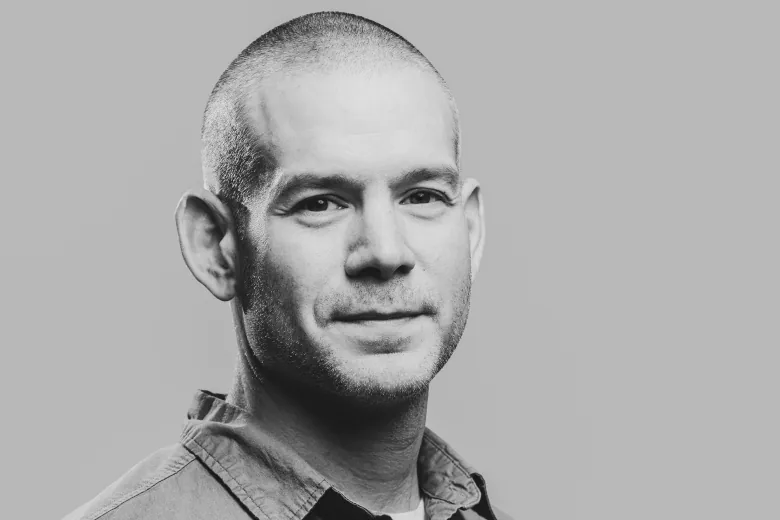
“The first step in the process is to really understand the place. [context]He described the “place” as “he said.
This does more than just encourage diversity. Bailey claims that it promotes creativity and improves the design process. Bailey says that the way architecture is done today doesn’t have to be changed.
“We can take those teachings, both from Indigenous knowledge and Western wisdom, and create a new paradigm to try and improve things.”
Produced and edited by McKenna Hadley Burke and Michelle Parise.
Source: CBC News