Rising interest rates in U.S. will hinder foreign economies

WASHINGTON
When the U.S. Federal Reserve raises interest rates — as it did Wednesday — the impact doesn’t stop with U.S. homebuyers paying more for mortgages or Main Street business owners facing costlier bank loans.
The fallout can be felt beyond America’s borders, hitting shopkeepers in Sri Lanka, farmers in Mozambique and families in poorer countries around the world. There are many effects that can be felt abroad, including higher borrowing costs and depreciating currencies.
“It will put pressure on all types of developing countries,’’ saidEric LeCompte (executive director of Jubilee USA Network), a coalition representing groups that seek to reduce global poverty.
The managing director of the International Monetary Fund, Kristalina Georgieva, was worried enough last month to warn the Fed and other rate-hiking central banks to stay “mindful of the spillover risks to vulnerable emerging and developing economies.’’
The IMF recently downgraded its outlook for economic growth in emerging and developing market countries this year to 3.8% due to the worsening financial environment. This is a full percentage point lower than what it had forecast in January.
Wednesday’s Fed rate increase was half a point higher than its benchmark short-term rate, which is its highest since the pandemic two years ago. It also signaled that there will be more rate increases.
In a variety of ways, U.S. rate increases can cause long-distance harm. First, they could slow the American economy and reduce U.S. consumers’ appetite for foreign goods.
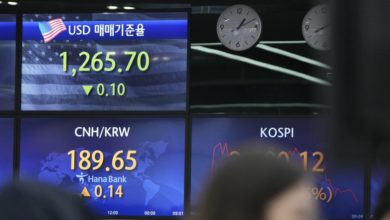
They have an impact on global investment. As interest rates rise in the United States, more investors are attracted to safer corporate bonds and government bonds. They are able to take money from low- and middle-income countries and place it in the United States. These shifts increase the U.S. Dollar and lower currencies in the developing countries.
Problems can arise from falling currencies. Falling currencies can make it more costly to buy imported food and other products. This is particularly worrying at a time when supply chains bottlenecks and war in Ukraine have already disrupted shipments and caused food prices to soar worldwide.
Central banks in developing countries will likely raise their rates to protect their currencies from falling. Some have already begun. This can lead to economic damage. It slows down growth, eliminates jobs, and makes it difficult for business borrowers. Indebted governments also have to spend more money on interest payments, and less on programs like fighting COVID-19, and feeding the hungry.
The IMF’s Georgieva has warned that 60% of low-income countries are already in or near “debt distress’’ — an alarming threshold reached when their debt payments equal half the size of their national economies.
Despite the potential collateral damage, the Fed is expected raise rates several additional times this year in an effort to curb resurgent American inflation.
Inflationary growth is a result of a sudden and strong recovery from the 2020 pandemic recession. This rebound caught businesses off guard and forced them scramble for workers and supplies to meet their customer demand. This has led to shortages, delays in fulfilling orders and higher prices. In March, U.S. consumer prices rose 8.5% from a year earlier — biggest jump since 1981.
By pushing up interest rates, the Fed is hoping to pull off a so-called soft landing — raising rates just enough to slow the economy and bring inflation under control but not enough to tip the U.S. economy into another recession.
Developed countries worry that the Fed has waited too long before launching its anti-inflationary program. The Fed will then be forced raise rates so aggressively that it causes a hard landing, which could hurt the United States as well as developing countries.
“They would have been much better off if the Fed would have reacted more swiftly when the problem started’’ last year, saidLiliana Rojas Suarez is a senior fellow at the Center for Global Development.
The Fed doesn’t have a great track record of engineering soft landings. The Fed’s last soft landing was in the mid-1990s when Chairman Alan Greenspan was Fed Chair. This episode proved to be a disaster for many developing countries.
“The U.S. was able to manage inflation well and avoid recession,’’ Rojas-Suarez said, “but at the same time created huge spillovers for emerging markets.’’ What followed was a series of financial crises — in Mexico, in Russia and eventually across much of Asia.
Robin Brooks, chief economist of the Institute of International Finance, noted that many emerging markets countries are now in a stronger financial position than in the past. This is even more true in 2013, when the Fed’s plans to reduce its easy money policies caused investment to flee the developing world.
For one thing, many have beefed up their foreign currency reserves, which central banks can use to buy and support their countries’ currencies or meet foreign debt payments in a crisis. On the eve of the 1997-1998 Asian financial crisis, for instance, Thailand’s reserves were equal to 19% of its economy; now they’re at 47%, according to the institute, a trade group for global banks.
Brooks also says that rising raw materials prices are “a bit of windfall’’ for commodities exporters like oil-producing Nigeria and soybean-producing Brazil.
However, some countries are still vulnerable to financial shocks. These countries include those that depend heavily on imported oil and commodities and have low reserves in comparison to what they owe others. At the top of Rojas-Suarez’s list of the most exposed to financial risks is Sri Lanka, which last month saidIt suspended repayment of foreign debt and was working with the IMF to restructuring its loan program. Mozambique and Turkey are also flagged as red.
Rising U.S. interest rates don’t always spell disaster for developing world countries. If they’re climbing because the U.S. economy is strong — and businesses and consumers want loans to buy things — that means more opportunities for countries with exports to sell into the U.S. market.
However, the consequences are very different when the Fed raises borrowing costs in a deliberate effort to slow U.S. Growth and relieve inflationary pressures.
“If higher rates are driven mainly by worries about inflation or a hawkish turn in Fed policy … this will likely be more disruptive for emerging markets,’’ economists from the Fed and the conservative American Enterprise Institute wrote in a paper last year.
This is, however, what the Fed is doing right now.
It’s another blow to countries still contending with big debts, large numbers of unvaccinated people and surging food prices.
“It’s added pressure,’’ LeCompte says, “and how much pressure can governments take?’’
SourceCTV