Stock markets end week on high note, after weeks of declines
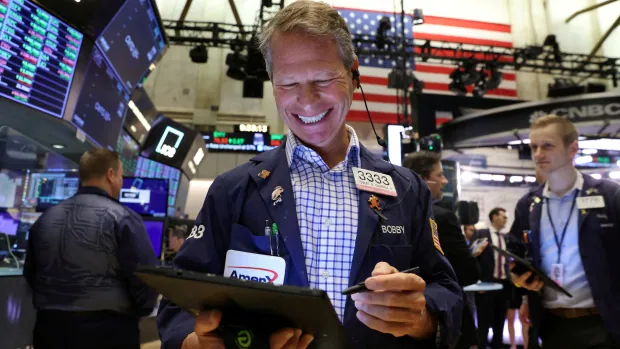

Stocks racked up more gains on Wall Street Friday, as the S&P 500 had its best day in two years and just its second week of increases in the last 12 to provide a bit of relief from the market’s brutal sell-off this year.
The benchmark index rose 3.1%, with banks and technology leading the rally. The S&P 500 notched a 6.4 per cent gain for the week, erasing the brutal loss it took a week earlier, though it’s still close to 20 per cent below its record set early this year.
The Dow Jones Industrial Average rose 2.7 per cent and the tech-heavy Nasdaq ended 3.3 per cent higher. Both indexes saw a weekly gain, which more than offset their losses last Wednesday.
Stocks rallied this week because investors believe the Federal Reserve may not be as aggressive in raising interest rate as previously thought. This is because it is trying to control inflation.
The gains are a reprieve from Wall Street’s tumble through most of the year, caused by the Fed’s and other central banks’ slamming into reverse the monetary support put into markets through the pandemic. In an effort to lower the inflation rate, central banks have raised interest rates. They also made other moves that could hurt investment prices and slow down the economy enough for a recession. Many economists forecast more moves.
“It’s been a good week.” said Randy Frederick, managing director of trading and derivatives at Charles Schwab. “It’s rare. We’ve only had a few weeks in 2022 where we were net positive. It looks very similar to the May end result, which was unfortunately lost.
The S&P 500 rose 116.01 points to 3,911.74. The Dow gained 823.32 point to 31,500.68 The Nasdaq rose by 375.43 points, to 11,607.62.
Consumer sentiment at record low
Although parts of the U.S. economy remain hot, especially the jobs market, there are some troubling signs that have been emerging recently.
Friday’s report confirmed that sentiment among consumers fell to its lowest level since records were kept by the University of Michigan. This was due in part to high inflation.
Another lowlight of the week was that economists didn’t think the U.S. manufacturing or services sectors were as strong as they thought.
This weakening data raises concerns about the strength the economy. As paradoxical as it may sound, they can also be good for financial market.
They could mean less consumer demand fuelling inflation, which would ultimately mean the Federal Reserve doesn’t have to raise rates so aggressively. Interest rates are the driving force behind trading in everything, from stocks to cryptocurrencies.
“We have seen a cooling in many areas, certainly.” Frederick: Gasoline prices are dropping, and housing prices seem to be cooling all over. said. “All of these points to the fact that what the Fed does now seems to be having an impact. It’s not clear if it will bring down inflation.
Source: CBC News